
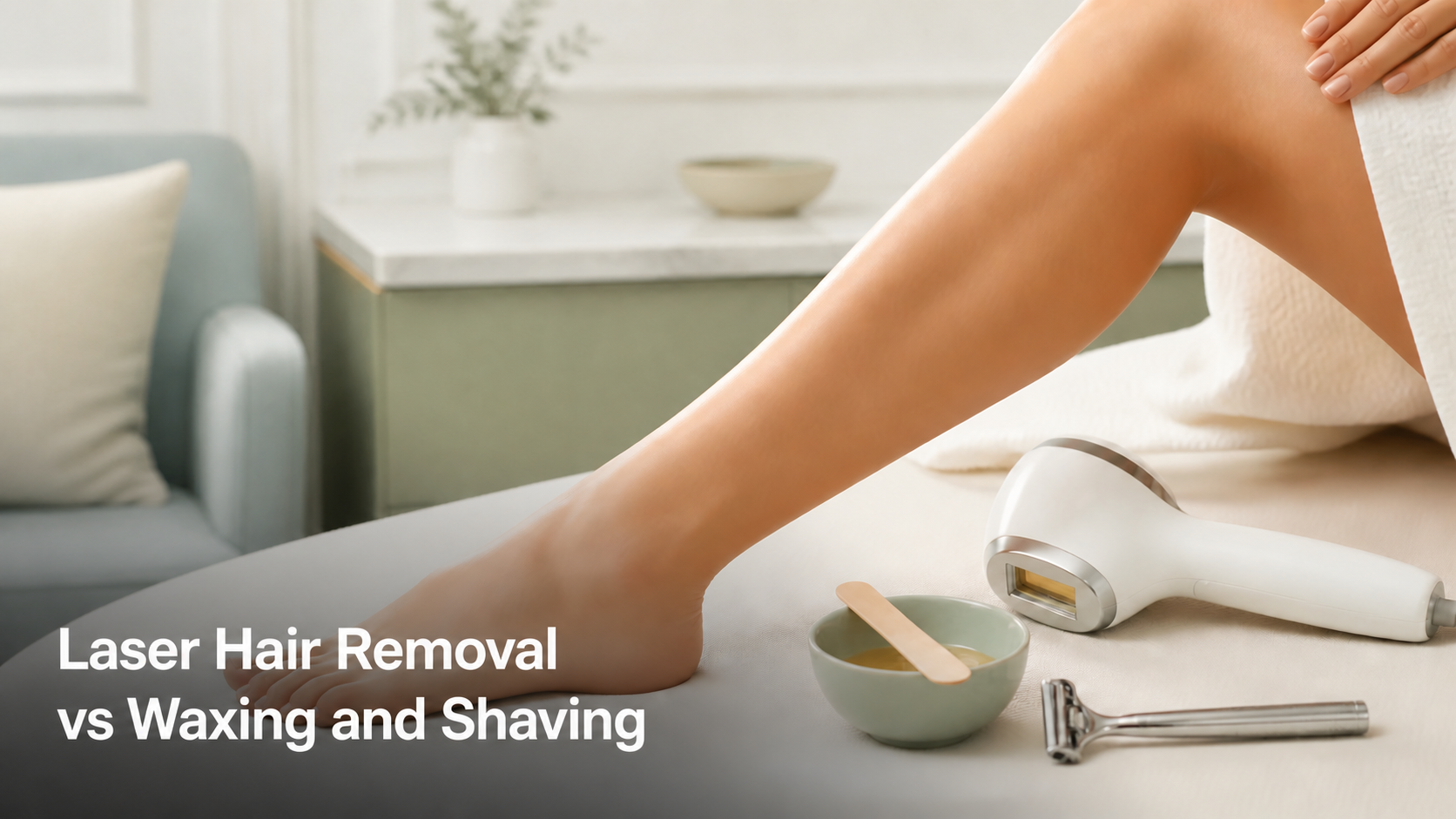
Laser Hair Removal vs Waxing and Shaving
Which Hair Removal Method Is Right for You?
Shaving and waxing can remove unwanted hair effectively, but both require
regular maintenance. Laser hair removal offers a longer-term reduction in
hair growth.
If you regularly shave or book waxing appointments, you may be wondering
whether laser hair removal could offer a more convenient alternative.
Each method has its advantages, limitations and costs. The best choice will
depend on your skin, hair, lifestyle, budget and the result you would like
to achieve.
How Does Laser Hair Removal Work?
Laser hair removal directs controlled light energy towards pigment in the
hair. The energy travels down the hair and heats the follicle, reducing its
ability to produce new growth.
Hair grows in different stages, and the laser is most effective when the
hair is in its active growth phase. Because not every follicle reaches this
stage at the same time, a course of treatments is normally required.
It is more accurate to describe the outcome as long-term hair reduction
rather than guaranteed permanent removal. Some hairs may remain, and
occasional maintenance treatments may be recommended.
Common Laser Hair Removal Areas
- Face and neck
- Underarms
- Arms
- Legs
- Bikini area
- Back and shoulders
- Chest and abdomen
The areas that can be treated depend on the technology being used and your
individual assessment.
How Does Shaving Compare?
Shaving cuts the hair at the surface of the skin. It is quick, accessible
and inexpensive in the short term, but it does not affect the follicle.
This means that visible regrowth can appear relatively quickly.
Depending on the area and the speed of hair growth, shaving may need to be
repeated every few days.
Common Shaving Concerns
- Razor burn and irritation
- Small cuts
- Ingrown hairs
- Dry or sensitive skin
- Frequent maintenance
- A rough or stubbly feeling as the hair returns
Shaving does not make hair grow back thicker. Newly shaved hair has a blunt
end, which can make it look or feel more noticeable as it grows back.
How Does Waxing Compare?
Waxing removes hair from the root rather than cutting it at the surface.
Results generally last longer than shaving because the hair must regrow
from within the follicle.
However, waxing does not normally stop future growth. Appointments must be
repeated as the hair returns, and the hair usually needs to reach a certain
length before it can be waxed again.
Waxing can also cause temporary redness, sensitivity, discomfort or ingrown
hairs. The experience can vary according to the treatment area and your
skin’s sensitivity.
Preparing for Laser Hair Removal
Waxing, plucking and threading normally need to be stopped before and
throughout a course of laser hair removal. These methods remove the hair
from the follicle, leaving the laser with less pigment to target.
Shaving is usually permitted and may be recommended shortly before an
appointment. Always follow the specific preparation instructions provided
by your practitioner.
Laser Hair Removal vs Waxing and Shaving
The main differences are the duration of the result, the level of
maintenance and the initial cost.
| Comparison | Laser | Waxing | Shaving |
|---|---|---|---|
| How it works | Targets suitable hair follicles using light energy | Pulls hair out from the root | Cuts hair at the skin’s surface |
| Result | Long-term reduction in suitable hair | Temporary hair removal | Temporary hair removal |
| Maintenance | Initial course with possible maintenance sessions | Regular appointments as hair regrows | Often required every few days |
| Initial cost | Higher | Moderate | Lower |
| Common concerns | Temporary redness or sensitivity | Discomfort, irritation or ingrown hairs | Razor burn, cuts or ingrown hairs |
| Hair length needed | Area is usually shaved before treatment | Some visible growth is needed | No minimum growth required |
Does Laser Hair Removal Work for Everyone?
Laser hair removal depends on pigment within the hair absorbing the laser
energy. Darker, coarser hair typically responds more readily because it
contains more suitable pigment.
White, grey, very blonde and some red hair may respond poorly because there
may not be enough pigment for the laser to target effectively.
Modern laser technology can treat a wider range of skin tones, but the
correct device and treatment settings are essential. A consultation and
patch test should be completed before starting treatment.
Your Practitioner Should Assess:
- Your natural skin tone
- Your hair colour and thickness
- The area you want treated
- Recent tanning or sun exposure
- Your medical history
- Any medication you are taking
- Your history of skin sensitivity or pigmentation changes
Is Laser Hair Removal Worth It?
Laser treatment may be worth considering if you want to reduce the time and
money spent on repeated shaving or waxing.
It may be particularly helpful if you:
- Shave or wax frequently
- Experience regular shaving irritation
- Are concerned about ingrown hairs
- Want smoother-looking skin with less regular maintenance
- Have hair and skin characteristics suitable for treatment
- Can commit to a recommended treatment course
Laser treatment generally costs more at the beginning than buying a razor
or booking a single waxing appointment. However, the reduction in future
growth may make it more convenient over the longer term.
What Happens During Laser Hair Removal?
Consultation and Patch Test
Your skin and hair are assessed to determine whether treatment is suitable.
A patch test may be completed so your practitioner can observe how your
skin responds.
Treatment Preparation
You will receive instructions about shaving, sun exposure, skincare and any
products that should be avoided before your appointment.
Laser Treatment
The laser handpiece is passed over the selected area. You may notice a warm,
prickling or snapping sensation as the energy is delivered.
Aftercare
The skin may appear red or feel sensitive for a short period. Your
practitioner will explain how to care for the area and when you can resume
shaving, exercise, swimming and your normal skincare routine.
Frequently Asked Questions
Is laser hair removal permanent?
Laser treatment can provide long-term hair reduction, but it cannot
guarantee that every hair will be removed permanently. Some people later
choose occasional maintenance treatments.
How many laser treatments will I need?
The number of sessions varies according to the treatment area, hair
colour, hair thickness, natural growth cycle and individual response.
Your practitioner will recommend a personalised course.
Can I shave between laser treatments?
Shaving is generally permitted between appointments. Waxing, plucking and
threading normally need to be avoided because they remove the hair from
the follicle.
Does laser hair removal hurt?
Sensation varies between people and treatment areas. It is often described
as brief warmth, prickling or a light snapping feeling.
Can laser hair removal treat blonde or grey hair?
White, grey, very blonde and some red hairs may not contain enough
suitable pigment for laser treatment to work effectively. This should be
assessed during your consultation.
Can I have laser treatment when I am tanned?
Recent tanning can increase the risk of burns and pigmentation changes.
You should follow the clinic’s sun-exposure guidance before and throughout
your treatment course.
Start Your Laser Hair Removal Journey
Ready to spend less time shaving or waxing? Arrange a personalised
consultation with Horizon Aesthetics and let our experienced team assess
your skin, hair and treatment goals.
|
Book Your Consultation |
This article is provided for general information and does not replace
personalised medical advice. Treatment suitability, risks and results vary
between individuals.