
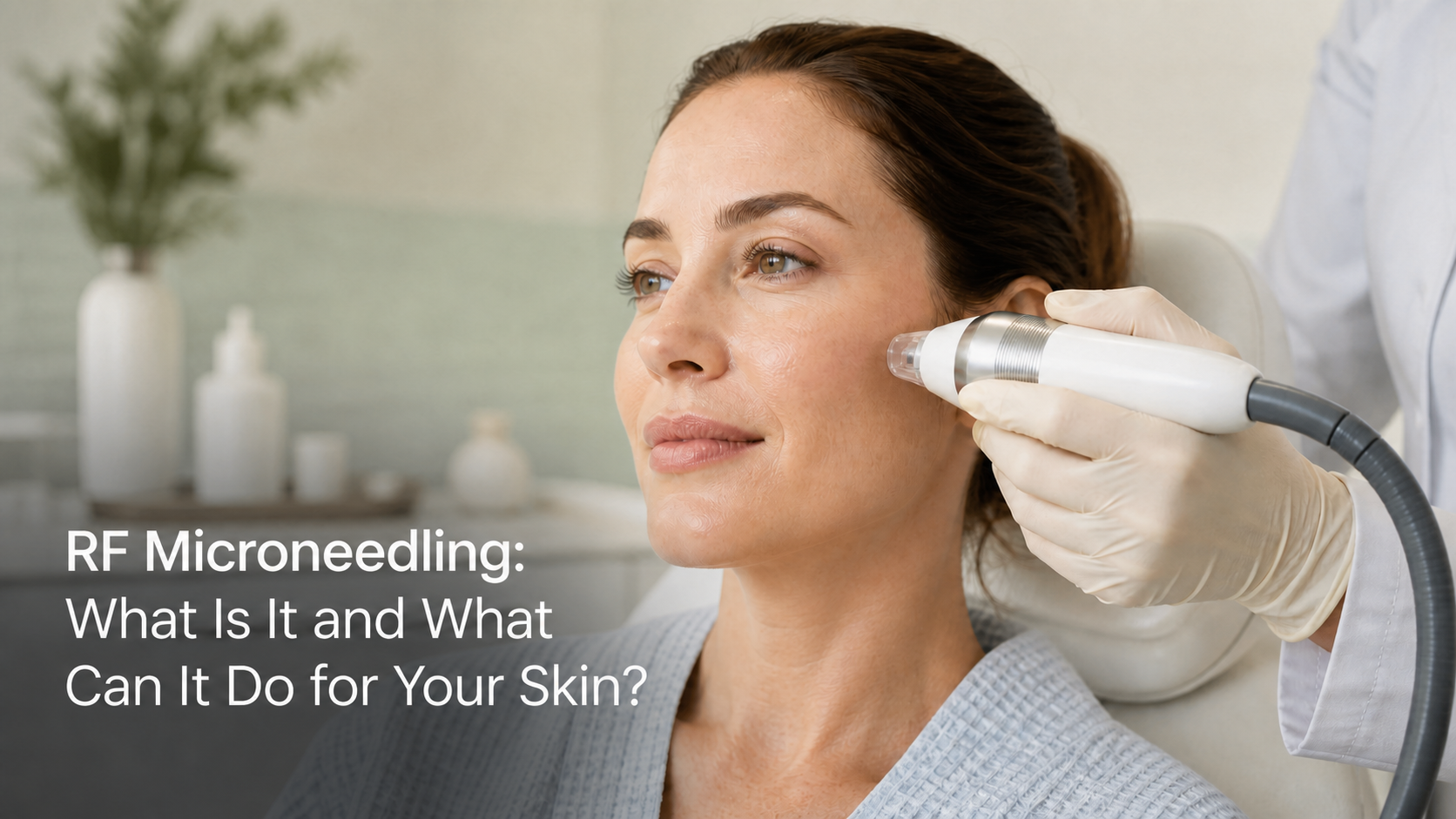
Five Skin Concerns RF Microneedling Could Help Improve
Could One Treatment Address More Than One Skin Concern?
From acne scars and uneven texture to fine lines and mild skin laxity, RF
microneedling is designed to support gradual skin renewal at carefully
selected depths.
Many skin concerns do not exist in isolation. You may be concerned about
visible pores as well as uneven texture, or notice fine lines alongside a
general loss of firmness.
RF microneedling combines controlled microneedling with radiofrequency
energy. This allows a trained practitioner to create targeted treatment
zones beneath the skin’s surface, encouraging a natural repair and
remodelling response.
Here are five common skin concerns that RF microneedling could help improve.
|
1
|
Acne Scarring
|
Acne may settle, but changes in the skin’s structure can remain long after
active breakouts have stopped. Indented acne scars develop when the skin
does not produce enough collagen during the healing process.
RF microneedling creates controlled treatment zones within the skin. The
combination of fine needles and radiofrequency energy is intended to
encourage collagen remodelling around suitable scars.
As the tissue gradually remodels, selected scars may appear softer, smoother
and less noticeable.
Not All Acne Scars Are the Same
Rolling, boxcar and ice-pick scars have different structures and may not
respond in the same way. Some scars may require a combined treatment
approach. An individual skin assessment is essential before deciding
whether RF microneedling is suitable.
RF microneedling may improve suitable acne scars, but it cannot guarantee
their complete removal.
|
2
|
Uneven Skin Texture
|
Skin texture can become uneven due to ageing, previous breakouts, sun
exposure, dehydration or changes in the skin’s natural renewal process.
Roughness and small irregularities can affect the way light reflects from
the skin, making the complexion look less smooth even when there is no
active skin condition.
By supporting the skin’s repair response and gradual collagen remodelling,
RF microneedling may help create a smoother and more refined-looking
surface.
Why Does Collagen Matter?
Collagen provides structural support within the skin. Natural collagen
production changes with age, which can contribute to roughness, fine lines
and reduced firmness.
RF microneedling is designed to create controlled micro-injuries and heat at
selected depths, prompting the skin to begin a gradual repair process.
|
3
|
Fine Lines
|
Fine lines develop as collagen, elastin and moisture levels change with age.
Repeated facial movement, sun exposure, genetics and lifestyle factors can
also contribute to their appearance.
RF microneedling may soften selected fine lines by supporting collagen and
elastin remodelling beneath the skin.
The aim is not to freeze facial movement or add volume. Instead, treatment
focuses on gradually improving the condition and structure of the skin.
Natural-Looking Skin Renewal
RF microneedling may be particularly appealing if you want a gradual,
natural-looking improvement rather than an immediate change in facial
shape or expression.
Deeper lines or folds may require a different treatment or combination of
treatments. Your consultation should include an honest discussion about
what RF microneedling can realistically achieve.
|
4
|
Enlarged-Looking Pores
|
Pores are a normal and essential part of the skin. They cannot be removed or
permanently closed, but their appearance can become more noticeable.
Genetics, oil production, congestion, sun damage and reduced support around
the pore can all influence how prominent it appears.
RF microneedling may make pores look less noticeable by improving the
texture and firmness of the surrounding skin.
Can RF Microneedling Remove Pores?
No treatment can remove pores. The goal is to improve the surrounding skin
so that pores appear more refined and the overall complexion looks
smoother.
If oiliness, congestion or active acne contributes to visible pores, your
practitioner may recommend an appropriate skincare routine or another
treatment alongside RF microneedling.
|
5
|
Mild Skin Laxity
|
As collagen and elastin levels change, the skin may begin to feel less firm.
Early laxity is often noticed around the lower face, jawline, neck or
selected areas of the body.
The radiofrequency element of RF microneedling delivers controlled heat
beneath the skin. This may support collagen contraction and longer-term
remodelling, helping the treated area appear firmer.
The improvement is gradual and should look natural rather than dramatically
changing your facial features.
Mild Laxity vs Significant Loose Skin
RF microneedling may help improve mild looseness, but it cannot remove
significant excess skin or reproduce the lifting effect of surgery. A
responsible consultation should identify whether a non-surgical treatment
can realistically meet your expectations.
Which Skin Concerns Could RF Microneedling Help?
The result and treatment approach depend on your skin, the severity of the
concern and the settings used.
| Skin Concern | Potential Improvement |
|---|---|
| Acne scarring | Suitable indented scars may gradually appear softer and smoother. |
| Uneven texture | The skin may develop a smoother and more refined-looking surface. |
| Fine lines | Selected fine lines may appear softer as the skin remodels. |
| Visible pores | Pores may look less noticeable as the surrounding skin improves. |
| Mild skin laxity | Selected areas may appear gradually firmer and more supported. |
How Quickly Will You See a Difference?
RF microneedling does not normally produce its final result immediately.
Redness and swelling can temporarily affect how the skin looks after
treatment.
Once the initial recovery has settled, improvements may develop gradually
over the following weeks and months as collagen remodelling takes place.
A course of treatments may be recommended depending on:
- The concern being treated
- The depth or severity of the concern
- Your age and skin condition
- Your natural healing response
- The treatment settings used
- The result you would like to achieve
Results vary between individuals, and occasional maintenance may be
recommended.
Is RF Microneedling Right for Your Skin?
RF microneedling can be suitable for a range of skin concerns, but it is not
appropriate for everyone.
Before recommending treatment, your practitioner should assess:
- Your main skin concerns
- Your skin type and condition
- Any active breakouts, infections or inflammation
- Your medical history
- Medication that could affect treatment or healing
- Your previous skin treatments
- Your tolerance for downtime
- Your expectations
Potential complications include infection, burns, pigmentation changes,
scarring and unwanted changes to the treated tissue. Choosing an
appropriately trained practitioner and following the recommended aftercare
are essential.
Frequently Asked Questions
Can RF microneedling treat several concerns at once?
A personalised treatment plan may address related concerns such as texture,
fine lines and visible pores. However, settings must be selected safely
for your skin and treatment area.
Can RF microneedling completely remove acne scars?
No treatment can guarantee complete scar removal. RF microneedling may
improve the appearance of suitable scars, while other scar types may
require a combined approach.
Does RF microneedling make pores disappear?
Pores cannot be removed or permanently closed. Improving the texture and
support of the surrounding skin may make them appear less noticeable.
Does RF microneedling tighten the skin?
It may improve the appearance of mild skin laxity through gradual collagen
remodelling. It cannot remove significant excess skin or reproduce a
surgical lift.
How many treatments will I need?
The recommended number depends on the concern, your skin and your desired
result. Some people benefit from a treatment course followed by occasional
maintenance.
Could RF Microneedling Help Your Skin Concern?
Arrange a personalised skin consultation with Horizon Aesthetics. Our team
will assess your concerns, explain what results may be achievable and
recommend the most appropriate treatment plan for your skin.
|
Book Your Consultation |
This article is provided for general information and does not replace
personalised medical advice. Treatment suitability, risks and results vary
between individuals.